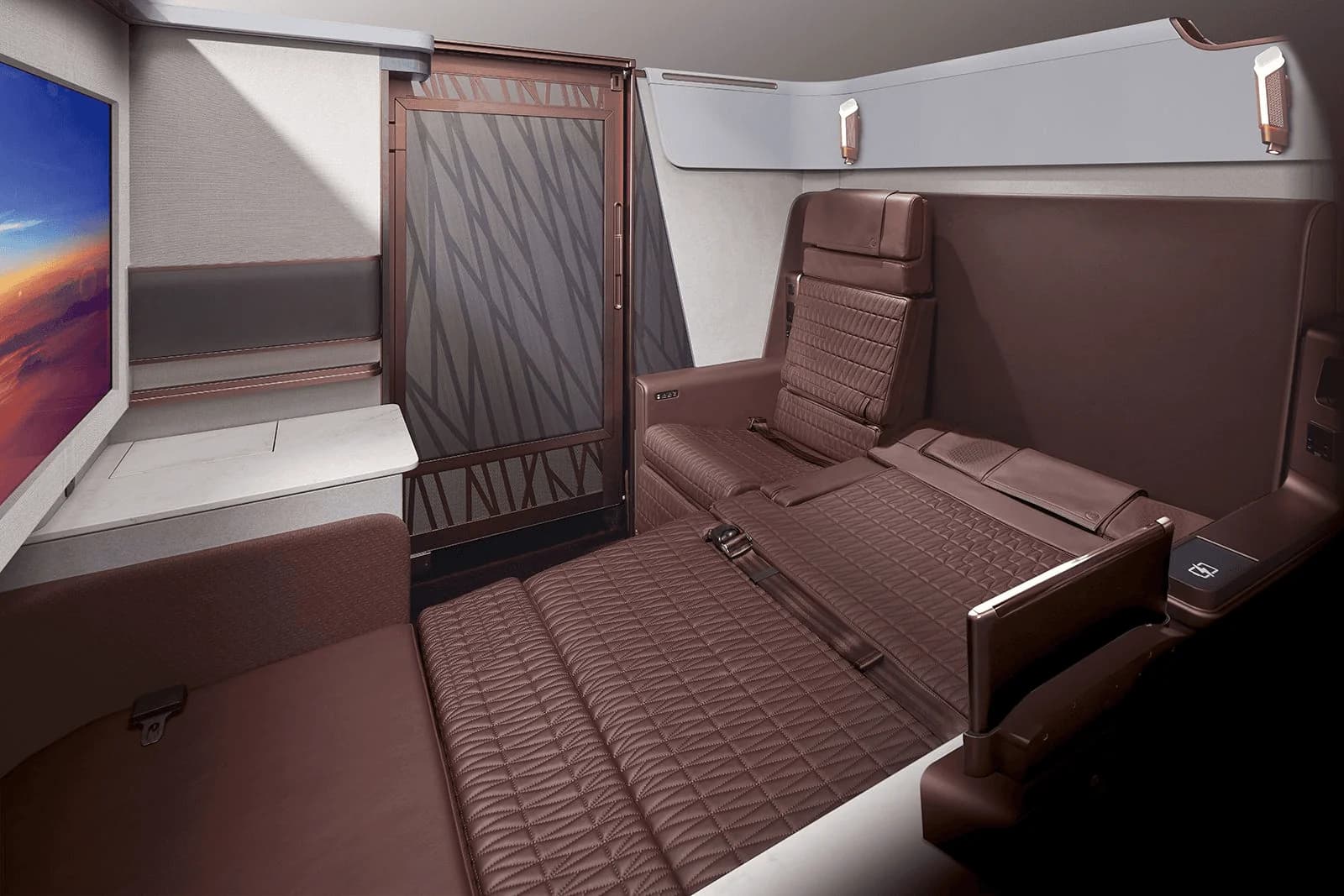
The Japan Airlines Airbus A350-1000 offers a modern long-haul experience with excellent comfort features throughout the cabin. This guide helps you select the best seats to maximize your comfort on JAL's premium widebody aircraft.
TL;DR
The A350-1000 features a modern cabin layout with Business and Economy classes. Exit rows and bulkhead seats offer the best extra space and comfort. Avoid seats with fixed armrests, tray tables stored in armrests, positions near bassinets, and rows without underseat storage for optimal legroom and convenience.
Business Class
Japan Airlines Business Class on the A350-1000 provides direct aisle access with premium amenities designed for long-haul comfort. Seats feature generous pitch and width for a restful experience. Access to exclusive cabin facilities and enhanced meal service elevates the premium experience.
Economy Class
Economy Class offers comfortable seating with modern IFE systems and reasonable legroom for long-haul flights. Standard economy seats provide adequate width and pitch for international travel. Premium economy seating options may be available on select routes for enhanced comfort.
Best seats
Seat
Cabin
Why
Exit Row Seats
Economy
Significantly more legroom due to regulatory clearance requirements
Bulkhead Seats
Economy
Extra space in front with no seat recline interference
Forward Cabin Positions
Business
Minimal engine noise and smoother ride experience
Seats to avoid
Seat
Cabin
Why
Seats with Fixed Armrests
Economy
Reduced width and inability to lower armrests for sleeping
Tray Table in Armrest Seats
Economy
Cannot use middle seat armrest; bulky tray table takes up space
Bassinet Positions
Economy
Infants nearby may cause sleep disruption; reduced privacy
Rows Without Underseat Storage
Economy
Limited personal item storage affects cabin comfort and convenience
✈️ The Version Lottery
Japan Airlines operates a single, unified A350-1000 Business Class configuration across its fleet - no door variants or generational seat splits to navigate. You can verify which aircraft operates your specific flight via the Japan Airlines website or third-party seat maps (SeatGuru, Airline Seat Maps) by checking the aircraft type field 2-3 weeks before departure. There's no version lottery here: every JAL A350-1000 Business Class seat is identical, so seat selection and route timing matter far more than chasing a "better" aircraft variant.
🏆 The Competitive Verdict
Against ANA's A350 Business Class on the same Tokyo - US/Europe routes, JAL's product splits the verdict: ANA's seats offer marginally superior recline range and slightly better direct-aisle accessibility for solo travelers, while JAL compensates with warmer service consistency and a more reliable meal experience that couples will appreciate. For tall passengers (6'2"+), both are equivalent - neither seat is meaningfully longer than the other. The honest call: pick JAL if you value predictable service and meal quality; pick ANA if you prioritize seat mechanics and want to gamble on crew personality. Route matters more than aircraft here; neither wins decisively enough to justify a connection change.
🛁 Lounge & Ground Experience
JAL's primary hub lounge is the Sakura Lounge (Terminal 3, Narita; Terminal 2, Haneda), which features shower suites, a full à la carte restaurant, and traditional Japanese bath amenities - Business Class and above get unrestricted access. The Haneda location is notably superior with shorter queues and faster showers than Narita. For premium cabin passengers, the ground experience justifies the Tokyo routing: the lounge shower and restaurant meal can meaningfully improve pre-flight comfort on 10+ hour flights, and Haneda's modern infrastructure edges out competing hubs like Singapore or Bangkok for routing convenience.
🌙 The Overnight Formula
Book seats 12A, 12K, or 13A - these forward Business Class rows minimize engine noise and toilet traffic while maintaining full direct-aisle access; avoid rows 17 - 19 if you're sensitive to lavatory proximity. Skip the dinner service and request a light breakfast instead; the overnight meal cycle often disrupts sleep more than it aids rest, and you'll land fresher if you sleep through service. Bring a quality neck pillow (memory foam, not inflatable) and compression socks - the A350's cabin pressure is excellent, but ankle swelling on 12+ hour flights compounds fatigue upon arrival. Land 90 minutes early, bypass the full breakfast, and head straight to your hotel shower to reset circadian rhythm; this approach beats fighting the meal cart for legitimate sleep.
FAQ
Does the A350-1000 have Premium Economy?
The Japan Airlines A350-1000 configuration does not include a dedicated Premium Economy cabin on this aircraft type.
Which seats have the most legroom?
Exit row and bulkhead seats offer the most extra legroom. Exit rows provide unrestricted legroom in front, while bulkhead seats eliminate the seat ahead.
Are Business Class seats direct aisle access?
Yes, Business Class seats on JAL's A350-1000 feature direct aisle access for enhanced privacy and ease of movement throughout the flight.
What should I know about underseat storage?
Some rows have limited or no underseat storage due to aircraft configuration. Check your specific row assignment to ensure your personal items fit appropriately.