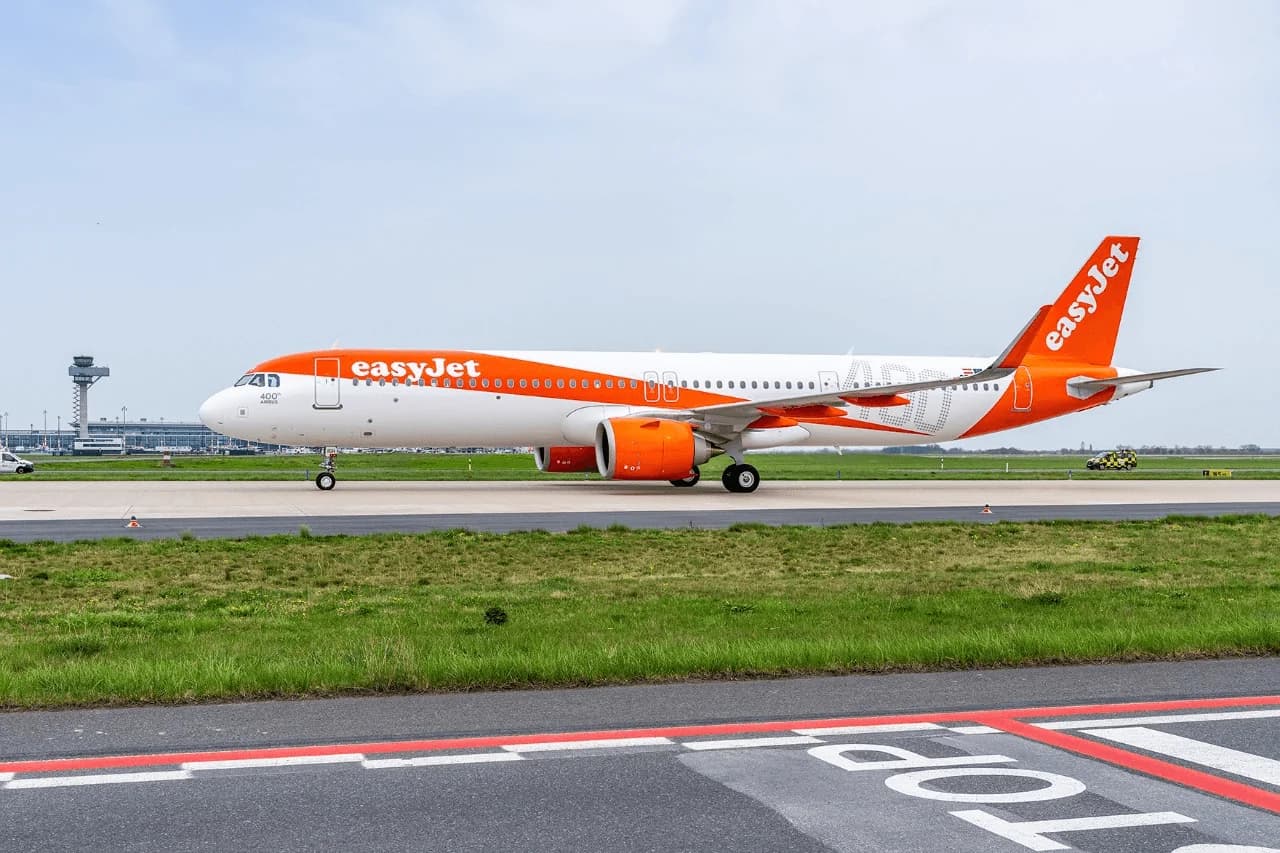
easyJet operates the fuel-efficient Airbus A320neo and A321neo across European routes with an all-economy configuration. These aircraft feature non-reclining Kestrel seats throughout the cabin, offering 28-29 inches of pitch. Discover which seats maximize legroom and comfort on these popular narrow-body jets.
TL;DR
easyJet's A320neo and A321neo are all-economy aircraft with consistent seating throughout. Exit row seats offer the most legroom, while all other rows are effectively identical with fixed Kestrel seats. Avoid the last row on current aircraft as it will become equivalent to other rows once new Kestrel seats are fully installed. Pitch of 28-29 inches is standard economy, so seat selection focuses primarily on legroom rather than cabin class amenities.
Business Class
easyJet does not offer a business class cabin on the Airbus A320neo and A321neo aircraft. All passengers travel in economy configuration with the same Kestrel seat product.
Economy Class
The A320neo and A321neo feature an all-economy layout with non-reclining Kestrel seats. Seat pitch measures 28-29 inches, which is standard for low-cost European carriers. The seats are fixed in position and do not recline, providing consistency across all rows. All rows offer identical comfort levels except for exit row seats, which provide additional legroom. The cabin is configured in a single-class layout throughout the aircraft, with no premium economy or business seating options.
Best seats
Seat
Cabin
Why
Exit row seats (various rows)
Economy
Provide additional legroom compared to standard rows, ideal for passengers seeking extra space on short to medium European flights
Any standard row
Economy
All non-exit rows are identical with consistent Kestrel seat configuration, so seat selection can prioritize aisle access or window preference
Seats to avoid
Seat
Cabin
Why
Last row
Economy
Currently offers reduced comfort on existing aircraft; this limitation will be eliminated once new Kestrel seats are fully deployed across the fleet, making it equivalent to other standard rows
💰 The True Cost Breakdown
easyJet charges €7 - €15 per seat for standard seat selection (depending on route length and demand), with front rows and exit rows commanding €15 - €25 premiums. Exit row seats offer genuine extra legroom (extra 6 - 8 inches) and are worth the upgrade if you're tall, but standard row upgrades to front sections rarely justify the fee since pitch remains constant at 28 - 29 inches. Compared to legacy carriers like Lufthansa or Air France, easyJet's seat fees appear cheap, but factor in the base fare's aggressive undercutting and the total trip cost often lands within 10 - 15% of a full-service competitor - without the meal, checked bag, or recline.
📐 The Space Reality
The A320neo and A321neo deliver 28 - 29 inches of pitch and 17.2 inches of seat width, meaning your knees will touch the seat back if you're over 5'10" and legroom feels genuinely tight on flights over 3 hours. Width is on par with Ryanair and Wizz Air, so you're not getting squeezed; the Kestrel seat is relatively slim but not painful. Tray tables are small and fixed to the armrest - a 13-inch laptop fits if you fold it slightly, but anything larger stays in your bag. Exit rows (33 - 34 inches pitch) transform the experience entirely and are worth every euro if available.
⚡ Power & Connectivity Reality Check
easyJet's A320neo and A321neo have no in-seat USB or power outlets on most aircraft; some newer examples are being retrofitted with USB-A ports, but don't count on it. WiFi exists via Intelsat and costs €4.99 for a one-hour pass or €6.99 for a full day, with real-world speeds around 2 - 5 Mbps - fine for emails, useless for video or large downloads. Passengers on flights over 2 hours should absolutely bring a 20,000 mAh battery pack; your phone will drop 30 - 40% on a 3-hour sector without it. The lack of power is easyJet's most annoying trade-off versus Ryanair (which offers USB on some routes) and a major gap versus legacy carriers.
🏃 Boarding & Exit Strategy
easyJet uses zone-based boarding (usually 5 - 6 zones), with paid seat selection holders boarding first, followed by standard passengers in groups - expect 30 - 40 minutes total from boarding call to door closure. Front-of-cabin (rows 1 - 10) evacuate fastest via the forward door, but exit rows (especially on the A321neo's longer fuselage) can clog during deplaning if the rear door isn't opened simultaneously. For tight connections under 75 minutes, request an aisle seat in rows 6 - 12 to balance boarding priority with quick aisle access; avoid back rows entirely. The rear fuselage empties slowly, so a row 28+ seat will cost you 5 - 8 minutes of deplane time on a full aircraft.
FAQ
Do easyJet A320neo and A321neo seats recline?
No, all Kestrel seats on these aircraft are fixed and do not recline. This is standard for easyJet's low-cost model across its A320neo and A321neo fleet.
What is the seat pitch on these aircraft?
The seat pitch measures 28-29 inches throughout the economy cabin, which is typical for European low-cost carriers on narrow-body aircraft.
Are there exit row seats with extra legroom?
Yes, exit row seats provide additional legroom compared to standard rows. These are the best seats available on the A320neo and A321neo and are worth selecting if available for longer flights.
Is there a business or premium economy class?
No, easyJet offers only an all-economy configuration on the A320neo and A321neo. All passengers have access to the same Kestrel seat product regardless of fare type.
Which is longer, the A320neo or A321neo?
The A321neo is a stretched version offering more seats than the A320neo, but the cabin configuration and seat specifications remain the same across both aircraft types.