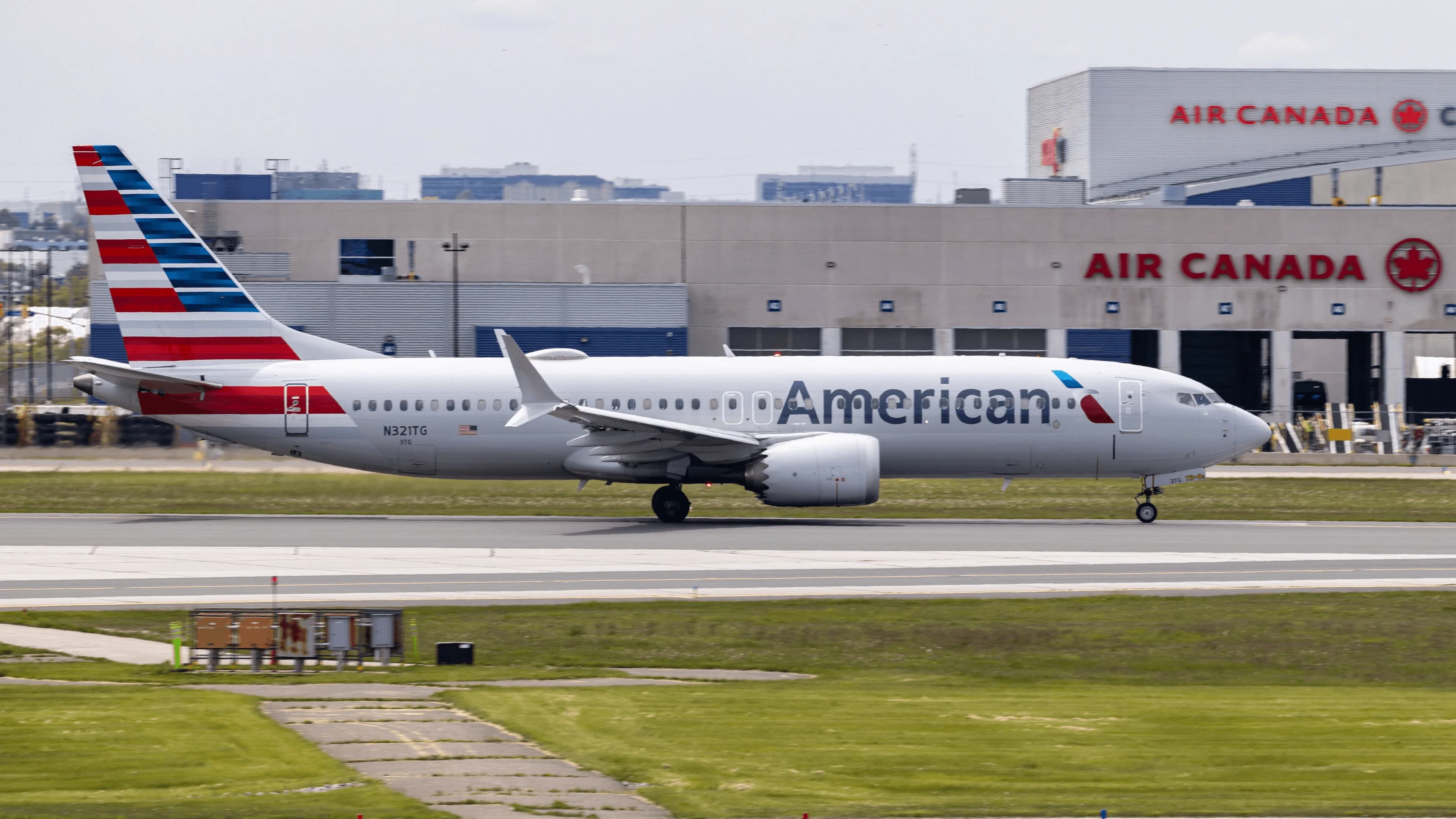
The Boeing 737 MAX 8 features American Airlines' modern cabin with competitive Business and Economy configurations. With 16 Business Class seats in a 2-2 layout and spacious Main Cabin Extra sections, this aircraft offers several premium seating options. Learn which seats deliver the best experience and which ones to skip.
TL;DR
American's 737 MAX 8 features a 2-2 Business layout with 37" pitch and a dense 3-3 Economy cabin at 30" pitch. Best seats are First Class rows 2-3 (2A/2F, 3A/3F) and Main Cabin Extra rows 8-9 and 16-17 with windows. Avoid row 1 First Class (limited power), standard Economy's tight pitch, and any seats without window views.
Business Class
Business Class on American's 737 MAX 8 offers 16 seats in a 2-2 configuration with 37 inches of pitch and 20 inches of width. The cabin provides direct aisle access from all seats, though there is no privacy door separating it from the main cabin. Rows 2-3 are the prime positions, offering the best proximity to the forward cabin amenities and smoother flight characteristics.
Premium Economy (Main Cabin Extra)
Main Cabin Extra sections are located in rows 8-9 and rows 16-17, offering enhanced legroom and priority boarding. These seats feature extra recline and improved amenities compared to standard Economy. Window seats in these rows are particularly desirable for views and comfort, though avoid aisle seats designated as "No window view."
Economy Class
Standard Economy operates in a 3-3 configuration with a tight 30-inch pitch and 16.6-17.8 inch widths. While adequate for short flights, the narrow pitch can feel constraining on longer routes. The cabin is functional but dense, making premium seating upgrades worth consideration.
Best seats
Seat
Cabin
Why
2A, 2F
Business
Premium forward positioning with optimal legroom and aisle access
3A, 3F
Business
Excellent Business Class location with direct galley proximity
8A, 8F, 9A, 9F
Main Cabin Extra
First MCE section with enhanced legroom and window views
16A, 16F, 17A, 17F
Main Cabin Extra
Second MCE section offering similar benefits further back
Seats to avoid
Seat
Cabin
Why
1C, 1D
Business
AC power only (no USB); positioned too far forward with potential galley noise
Standard Economy rows
Economy
Tight 30-inch pitch uncomfortable for longer flights; limited recline
Proximity to lavatories, reduced overhead bin space, and potential noise
⚡ Power & Connectivity Reality Check
The 737 MAX 8 seats include a single USB-A port and AC outlet at every Business Class seat, making it one of American's more consistently powered aircraft - but USB-C remains absent, so bring an adapter. American's seatback IFE (directional video on demand) streams reliably on this aircraft, though power users should expect moderate WiFi speeds (typically 2-4 Mbps) even with paid passes due to the 737's smaller fuselage antenna. Bluetooth audio pairing works well for personal devices, but the seatback system remains your most stable entertainment option on cross-country flights.
🧳 Overhead Bin Strategy
The 737 MAX 8 has approximately 5,511 cubic feet of total cargo space, but overhead bins fill quickly on full flights due to the narrow fuselage - expect gate-checking of roller bags on flights above 85% capacity. Business Class passengers in rows 2 - 3 board early enough (Group 1) to guarantee overhead access directly above or one row forward, while row 4 passengers should stow bags immediately upon boarding. Orient wheels-inward when possible; the narrower bins force most roller bags to sit sideways, consuming more space than intended.
🏃 Boarding & Exit Strategy
American's boarding system prioritizes elites and Business Class in Group 1, allowing rows 2 - 4 to exit via the forward L1 door immediately upon landing - a crucial advantage on tight connections. The fastest deplane seats are 2A and 2B (closest to the L1 exit), followed by row 3; avoid row 4 if you have a tight connection under 45 minutes. The rear R1 door opens simultaneously, but it serves the Economy cabin, so Business passengers should head forward for the shortest exit time.
📱 The Booking Intelligence
Seat selection for paid fares opens immediately at booking, while Basic Economy customers must wait until 24 hours before departure - meaning prime Business Class seats (2A, 2B, 3A, 3B) rarely remain available for non-elites. American reserves exit rows for elite members and premium passengers, so they typically unlock for cash purchasers only 72 hours before flight. Booking the 737 MAX 8 via the specific aircraft filter on third-party sites is difficult, but premium cabin seats become scarce 48 - 72 hours out; your best strategy is to book early or check availability at the 24-hour gate (when Basic Economy access opens and upgrades clear).
FAQ
Does Business Class have doors for privacy?
No, the 737 MAX 8 Business Class does not have privacy doors between the cabin and Economy. However, the forward positioning and 2-2 layout provide a more intimate experience than the main cabin.
What's the difference between Business and Main Cabin Extra?
Business Class offers premium amenities, better meal service, and priority treatment, while Main Cabin Extra provides enhanced legroom and priority boarding but operates with standard Economy service. Business seats are fully lie-flat with superior pitch and width.
Are aisle seats in Main Cabin Extra worth it?
Only if they include window views. Seats marked "No window view" in MCE are positioned with interior bulkheads blocking windows, making them less desirable despite premium pricing. Window seats (A/F positions) are preferable.
What is the seat pitch difference?
Business Class offers 37 inches of pitch versus Economy's 30 inches - a 7-inch difference that significantly impacts comfort on longer flights. Main Cabin Extra seats typically provide slightly more recline despite the same pitch measurement.
Is row 1 Business worth booking?
Row 1 has AC power only in seats C and D, with no USB charging available. Rows 2-3 are superior choices for both comfort and modern charging amenities.