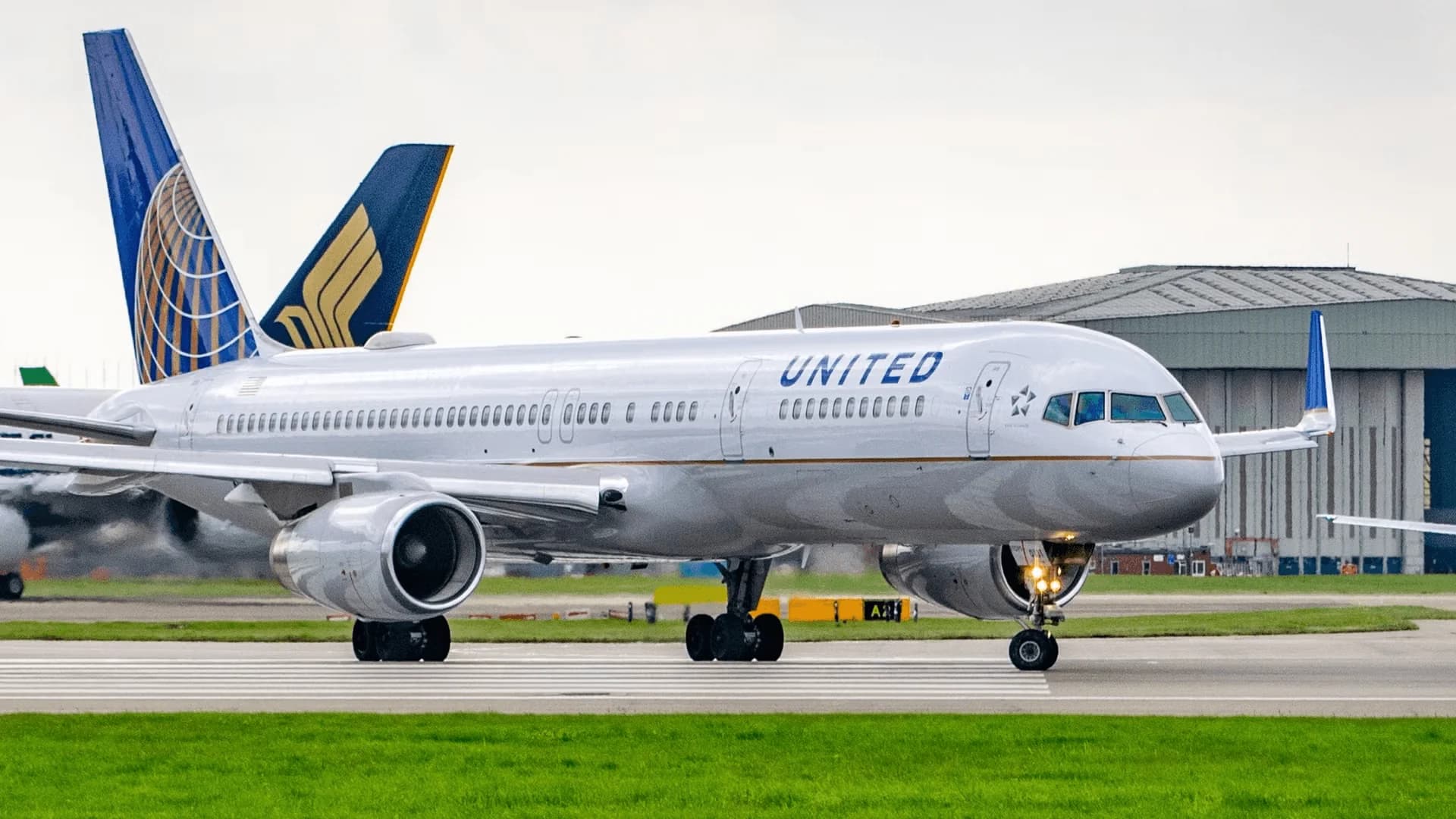
The Boeing 757-200 is a popular narrow-body aircraft in United's fleet, offering Business and Premium Economy cabins. With a 2-2 Business Class layout and limited cabin width, seat selection significantly impacts your comfort level.
TL;DR
Business Class features a 2-2 configuration with 76-inch pitch and 20.6-inch seat width across 16 seats. Aisle seats (B and E) offer superior accessibility compared to window seats (A and F) which lack direct aisle access. Premium Economy is available, though full specifications are limited. Avoid window seats in Business Class if you prioritize convenience and restroom access.
Business Class
United's Business Class on the 757-200 features a 2-2 seating arrangement with 16 total seats. The cabin offers a generous 76-inch pitch for leg room and 20.6-inch seat width. However, this narrow-body aircraft configuration means Business Class lacks a privacy door between cabins. The 2-2 layout is more compact than larger aircraft, making middle seat orientation important for your flight experience.
Premium Economy
Premium Economy is available on this aircraft, though specific seat dimensions, pitch, and layout details are not publicly specified. Premium Economy typically offers enhanced comfort over standard Economy with better legroom and amenities.
Economy Class
Economy Class specifications including layout, pitch, and seat width are not publicly available for this aircraft configuration. Standard Economy seating follows the narrow-body design typical of 757-200 operations.
Best seats
Seat
Cabin
Why
1B
Business
Front row aisle seat with direct aisle access and preferred boarding
1E
Business
Front row aisle seat on opposite side, equally convenient for restroom access
2B
Business
Aisle seat with full pitch and no one in front blocking movement
Seats to avoid
Seat
Cabin
Why
1A
Business
Window seat with no direct aisle access, requires climbing over neighbor
1F
Business
Window seat with no direct aisle access, furthest from galley and restrooms
All A seats
Business
Window positions lack direct aisle access in 2-2 configuration
All F seats
Business
Window positions lack direct aisle access in 2-2 configuration
⚡ Power & Connectivity Reality Check
The Boeing 757-200 lacks seatback in-flight entertainment on most United configurations, relying instead on streaming to personal devices via United's app - a critical limitation for long flights. Power availability is spotty: Business Class typically has AC outlets at select seats, while Economy generally has none, though some refurbished aircraft include USB ports in Economy rows. WiFi speeds vary dramatically depending on the ground infrastructure and air route; expect reliable connectivity on most domestic routes but potential dropouts on transoceanic flights. Bluetooth audio pairing works for headphones, but the lack of traditional seatback screens means you'll need a fully charged phone or tablet for the entire flight.
🧳 Overhead Bin Strategy
The 757-200's overhead bins are notoriously tight for a narrow-body aircraft - expect 45-50% less capacity than newer Airbus A320s or Boeing 737 MAX aircraft. Gate-checking is common on full flights, particularly for connections during peak travel periods, so secure your overhead bin space early. Rows 1-5 in Business Class and Rows 8-12 in Economy board early enough to guarantee overhead bin access; passengers boarding in later groups should plan to check bags. Orient roller bags wheels-in (lengthwise) rather than sideways to maximize depth and prevent others from blocking your space.
🏃 Boarding & Exit Strategy
United boards by zones determined by fare class and elite status, with Business Class (Zone 1) followed by Premier members and paid-up Economy Plus passengers; the slowest Economy passengers board last. For deplaning, seats in the front five rows of the cabin exit first through the forward door within 90 seconds; rear Economy (Rows 25+) can take 5+ minutes using the aft door. If you're connecting to another flight with less than 45 minutes, Business Class seats 1-4 or front-row Economy offer the fastest exit; avoid middle and rear Economy seats for tight connections. The 757-200's single forward and single aft door create bottlenecks, so position yourself on the aisle if possible.
📱 The Booking Intelligence
Seat selection opens at purchase for paid Economy fares, but premium Economy Plus and Business Class seat assignments are often available 24 hours before departure even for basic Economy fares. Exit-row and bulkhead seats are typically held for Elite frequent flyers until 48 hours before departure, then released to the general public - book these strategically if you don't have elite status. The best seats (forward cabin, exit rows, bulkhead with extra legroom) disappear 7-10 days before departure on competitive domestic routes; for leisure travel, lock in your seat selection immediately when the 24-hour window opens. Pro tip: if your original seat selection isn't ideal, check again 24 hours before departure - elite members often release premium seats as they upgrade or finalize plans, freeing up better options for rebooking.
FAQ
Does the 757-200 Business Class have direct aisle access?
Only aisle seats (B and E) provide direct aisle access. Window seats (A and F) require climbing over your neighbor to reach the aisle, making them less convenient for frequent restroom trips.
Is there a privacy door in Business Class?
No, the Boeing 757-200 Business Class does not feature a privacy door separating it from the Premium Economy or Economy cabins.
What's the seat pitch in Business Class?
Business Class offers 76 inches of seat pitch, providing generous legroom for long-distance travel on this narrow-body aircraft.
How wide are Business Class seats?
Business Class seats are 20.6 inches wide, which is comfortable for a 2-2 configuration but narrower than wide-body aircraft business class offerings.
Is Premium Economy worth booking?
Premium Economy provides enhanced comfort over standard Economy. Exact specifications aren't publicly detailed, but it typically offers better legroom and amenities for a mid-tier price point.