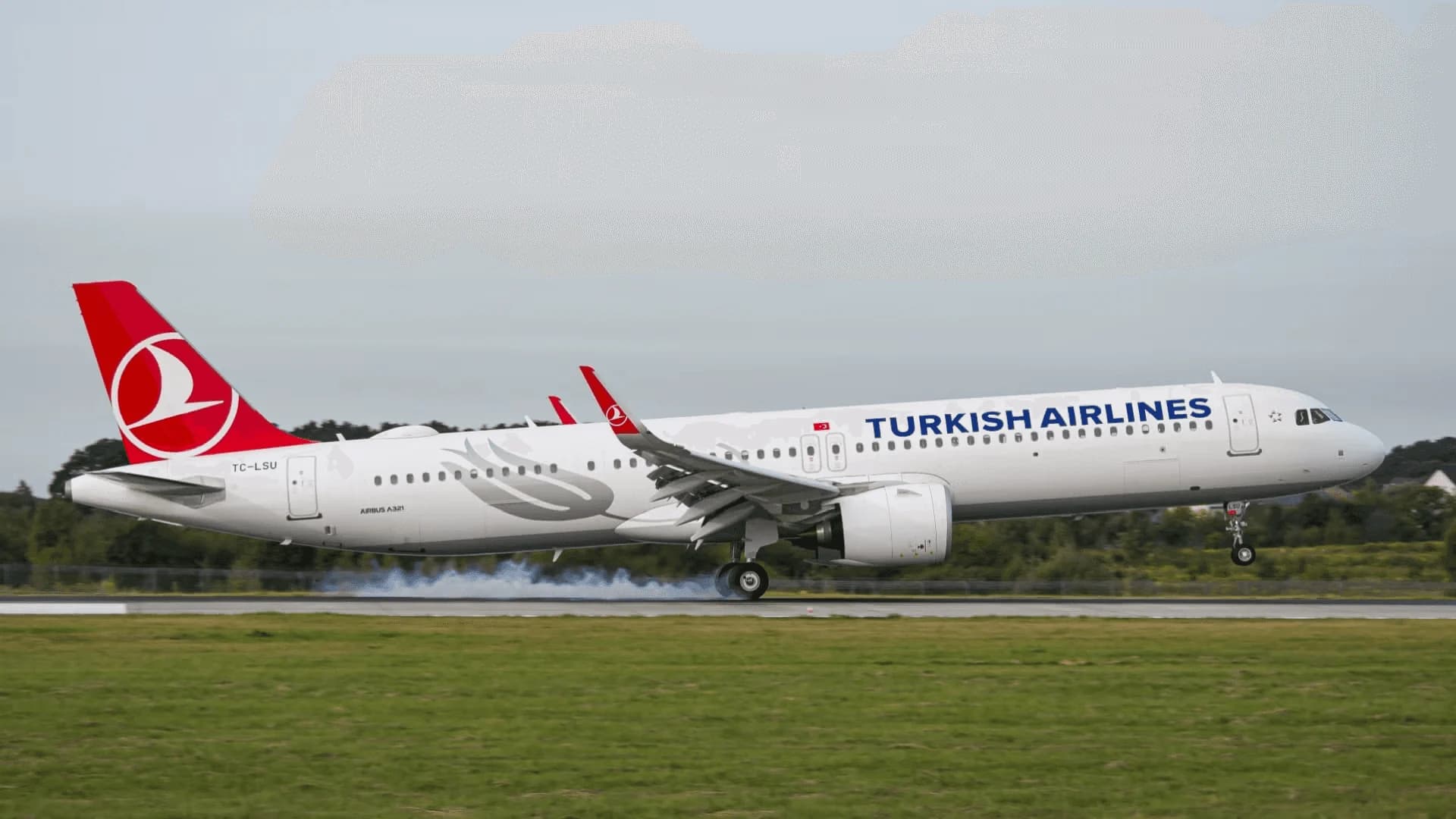
The Turkish Airlines A321neo offers a comfortable single-aisle experience with business and economy cabins. With a 2-2 business layout and generous 34-inch pitch, this narrow-body jet is ideal for medium-haul routes across Europe and Asia. Learn how to find the best seats and avoid potential comfort issues.
TL;DR
The A321neo features a 2-2 business cabin with excellent legroom and a 3-3 economy layout with standard 31-inch pitch. Book seats 1A or 1F in business for maximum legroom and privacy, or grab exit row window seats in economy for extra space. Avoid middle seats in economy and rear rows due to limited recline and potential galley/lavatory noise.
Business Class
Turkish Airlines operates two A321neo configurations with either 20 or 16 business seats in a 2-2 layout. Business class offers approximately 34 inches of pitch, providing comfortable legroom for medium-haul flights. Seats feature direct aisle access and are positioned forward in the aircraft for quicker boarding and deplaning. However, note that this cabin does not feature a privacy door, so noise from the galley area may be noticeable. The business product is ideal for regional European and Middle Eastern routes.
Economy Class
Economy occupies the rear of the aircraft in a standard 3-3 configuration with approximately 31 inches of pitch. This is typical for narrow-body aircraft and suitable for flights under 4 hours. Window and aisle seats offer more comfort than middle seats. Exit row seats provide additional legroom, making them premium economy alternatives without extra cost. Economy cabins experience typical galley and lavatory activity, with noise levels highest in the final rows.
Best seats
Seat
Cabin
Why
1A / 1F
Business
Front row offers maximum legroom and first access to amenities
11A / 11F
Economy
Exit row window seats provide extra legroom without middle seat proximity
12A / 12F
Economy
Exit row seats with excellent space and direct aisle access
Seats to avoid
Seat
Cabin
Why
Middle seats (B, E)
Economy
Cramped between two passengers with limited armrest space
Last 3 rows
Economy
Proximity to lavatory and galley creates noise and odor issues
Bulkhead seats
Economy
No under-seat storage and wall proximity limits comfort
⚡ Power & Connectivity Reality Check
Turkish Airlines A321neo business class seats feature individual USB-A ports and AC power outlets at each seat, though older A321 variants may lack AC outlets entirely - verify your specific aircraft on the booking confirmation. The airline offers seatback IFE on most routes, though some shorter domestic flights stream content to personal devices via Turkish Airlines' app instead. WiFi speeds are reliable for basic messaging and email but not consistently fast enough for seamless video streaming; Bluetooth audio connectivity is available for pairing personal headphones to the seatback system.
🧳 Overhead Bin Strategy
The A321neo cabin is narrower than widebody aircraft, making overhead bins tighter - expect reduced capacity compared to A330 or 787 routes, with bins filling quickly on full flights. Business class passengers typically board early enough to secure overhead space, but rolling your carry-on wheels-first into the bin is essential to maximize depth and prevent gate-checking. Gate-check likelihood increases significantly on full leisure routes; if traveling with a full-size roller, consider gate-checking preemptively rather than fighting for space and delaying boarding.
🏃 Boarding & Exit Strategy
Turkish Airlines boards business class first, followed by elite frequent flyers and economy passengers, ensuring quick cabin access. Front-row business seats (1A/1B) offer the fastest egress via the forward door, reducing deplaning time by 2-3 minutes compared to rear-cabin seats. For tight domestic connections under 90 minutes, seat 2A or 2B provides a balance of quick exit without the overhead bin congestion that rows 1-3 often experience; the rear L1 door typically handles economy deplaning, keeping aisles clear.
📱 The Booking Intelligence
Turkish Airlines releases seat selection for business class immediately upon booking, regardless of fare type, giving you first-mover advantage on premium cabin seats. Exit row seats (typically rows 10-11 in economy) are held for elite members until 48 hours before departure, then released to the general cabin. Front row business seats (1A/1B, 2A/2B) become available as soon as you purchase your ticket - book these within hours of ticket purchase to avoid waitlists. Practical tip: if upgrading or purchasing business class, complete your booking and seat selection on the same day, as premium cabin availability is often oversold by the second day on popular routes like Istanbul-London or Istanbul-Paris.
FAQ
Is the A321neo a comfortable aircraft?
Yes, the A321neo is a modern narrow-body jet with improved cabin air quality and lighting. Business class offers excellent regional comfort, while economy is adequate for flights under 4 hours. The aircraft is relatively new and well-maintained by Turkish Airlines.
Which seats have the most legroom?
Business class rows 1-3 and economy exit rows (11-12) offer the most legroom. Avoid bulkhead rows which restrict under-seat storage and footrest positioning.
Does Turkish Airlines A321neo have power outlets?
Business class seats typically feature power outlets. Economy seats generally do not have individual power options on this aircraft type.
Are there any seat restrictions I should know about?
Exit row seats may have age or mobility restrictions depending on local regulations. Middle seats in economy are not recommended due to comfort constraints on this narrow-body aircraft.
How many passengers does the A321neo carry?
Turkish Airlines configures the A321neo with either 156 or 160 total seats depending on the cabin version, accommodating regional and medium-haul markets efficiently.