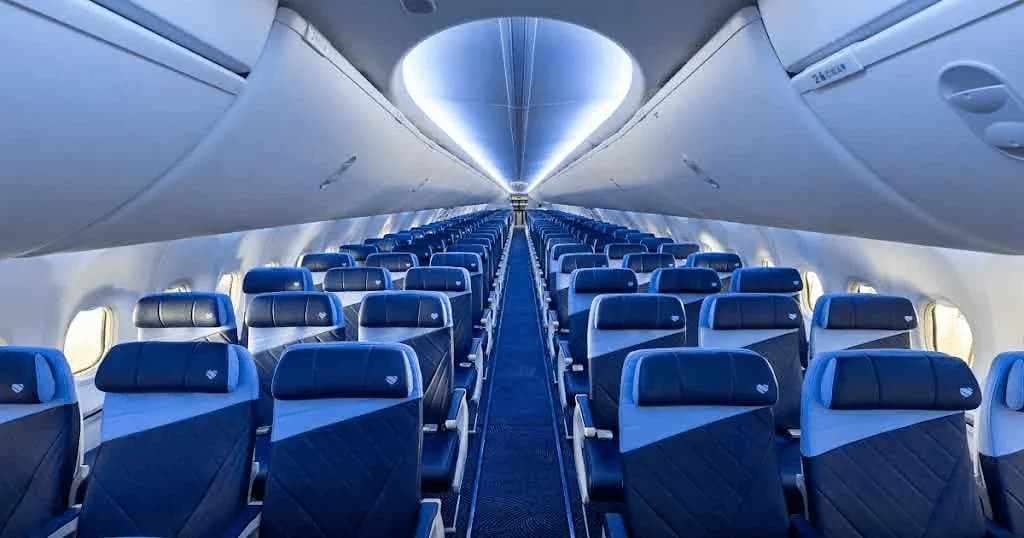
Southwest Airlines operates three variants of the Boeing 737 with a single-cabin, all-economy configuration. Understanding seat selection on these aircraft can significantly improve your comfort, especially regarding seat width and pitch variations across models.
TL;DR
Southwest's 737s feature a standard 3-3 single-aisle layout with 31-inch pitch and 17-17.8 inch width. Best seats are 15A/15F on 737-700s and 16A/16F on 737-800s and MAX 8s due to extra legroom. Avoid standard economy seats on older 737-700s, which have narrower seats and outdated interiors compared to newer variants.
Cabin Configuration
Southwest operates an all-economy configuration across all three 737 variants with no business class or premium economy cabin. All aircraft feature a 3-3 single-aisle layout typical of narrow-body Boeing 737s.
Economy Class
Standard economy seats offer 31 inches of pitch and 17-17.8 inches of width. The 737-700 has older seat designs with slightly narrower dimensions, while 737-800 and 737 MAX 8 feature more modern seating with improved comfort. All seats recline to a modest degree. Southwest's open seating policy allows flexibility in seat selection during online check-in 24 hours before departure.
Best Seats
Seat
Aircraft
Why
15A, 15F
737-700
Extra legroom near the forward galley area with minimal foot traffic
16A, 16F
737-800, 737 MAX 8
Extra legroom with improved modern seating and better cabin amenities
Rows 1-2
All variants
Bulkhead seats offer maximum legroom but limited recline and potential noise from galley
High foot traffic, proximity to lavatories, and increased noise
Aisle seats, rows 10-24
All variants
Frequent passenger movement and beverage cart bumping during service
Middle seats
All variants
Narrowest armrests and least personal space in 3-3 configuration
💰 The True Cost Breakdown
Southwest's boarding system is famously non-assigned seating, meaning you cannot purchase specific seat selections at booking - you board in groups (A, B, C) and choose available seats. However, Early Bird Check-In ($15 per flight) or Upgraded Boarding ($40 - $75) let you board earlier and snag premium positions like exit rows or front cabin seats without additional per-seat fees. Exit row seats offer the most legroom (38 inches pitch) but carry no extra charge beyond boarding position. Compared to legacy carriers charging $15 - $35 per flight for seat selection plus $50 - $100 for exit rows, Southwest's model is genuinely cheaper if you're flexible or willing to pay once for boarding priority rather than multiple per-flight seat fees.
📐 The Space Reality
Standard economy seats deliver 31 inches of pitch with 17 - 17.8 inches of width; exit row seats jump to 38 inches of pitch, a meaningful gain for legroom but not revolutionary. Compared to United's 31-inch pitch on 737s, Southwest is identical, though American's 32 - 33 inches on similar equipment edges ahead slightly. The seats themselves are not slimline - they're traditional economy with real cushioning - so even on the narrower 737-700, you won't feel pinched by seat design, though the fuselage itself is the limiting factor on width. Laptop work is comfortable in standard rows, and the tray table is large enough for a 13 - 14-inch screen; exit row seats offer luxury space for productivity.
⚡ Power & Connectivity Reality Check
Southwest does not offer seatback power outlets or USB ports on any 737 variant - a significant gap compared to newer 737 MAX aircraft at competitors or larger aircraft like 787s. WiFi is available through Viasat and costs $7 for a one-day pass or $70 annually; real-world speeds are modest (2 - 5 Mbps typical), adequate for email and messaging but not video streaming. If you work or stream during flight, bring a fully charged external battery pack; a 20,000 mAh battery will extend your devices by 1 - 2 flights. The lack of power is Southwest's weakest connectivity story - it's purely smartphone and laptop battery-dependent.
🏃 Boarding & Exit Strategy
Southwest's open-seating system means you'll board in one of three groups (A1 - 60, B1 - 60, C) determined by check-in timing; Upgraded Boarding pushes you into the A group for a fee. The rear doors deploy on 737s, so seats in rows 25 - 37 exit faster than front-cabin rows, assuming you choose an aisle seat near the back. For a tight connection, book Upgraded Boarding to board early, then select an aisle seat in rows 27 - 32 for fastest deplaning via the rear exit. Early Bird Check-In ($15) at 24 hours is the budget-conscious move if you're flexible on seat location but want reasonable boarding priority.
FAQ
Does Southwest offer extra legroom seats?
Southwest doesn't charge for seat selection and operates an open seating policy. Rows 1-2 offer bulkhead legroom, while certain rows near galleys provide extra space. Early boarding (within 15 minutes of departure) through A-List status or purchased boarding priority increases chances of securing these seats.
What's the difference between 737-700, 737-800, and 737 MAX 8?
The 737-700 is older with narrower seats (17 inches) and more basic interiors. The 737-800 offers improved seating (17.8 inches) and modern amenities. The 737 MAX 8 is the newest with the widest seats, enhanced cabin pressure systems, and larger windows for a more comfortable experience.
Are there privacy doors or lie-flat seats?
No. Southwest operates an all-economy configuration with no business class, privacy doors, or lie-flat seating. All seats are economy-class with modest recline.
How can I get the best seats on Southwest?
Check in exactly 24 hours before departure for online check-in, or arrive early for airport check-in to secure preferred seating. Purchasing boarding positions (A-List, Business Select) increases your boarding priority and seat selection options.
Which rows have extra legroom?
Rows 1-2 (bulkhead) offer the most legroom. Rows 15-16 near galley areas provide additional space, though availability varies by aircraft configuration and flight demand.