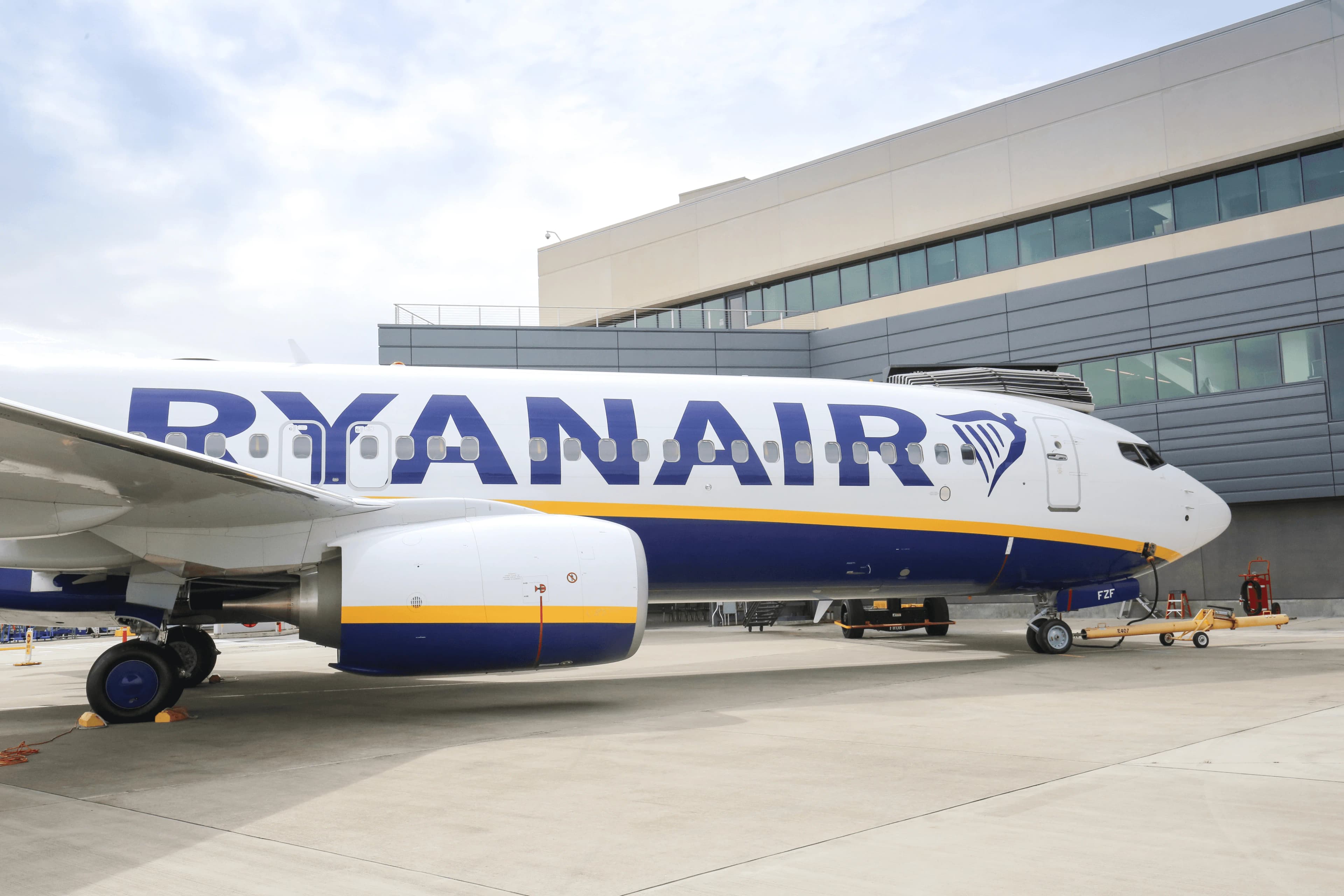
Ryanair's Boeing 737 is a no-frills workhorse with tight 30-inch pitch and 17-inch wide economy seats. Exit row seats offer the only meaningful legroom upgrade. Knowing which rows to book can significantly improve your comfort on this popular European aircraft.
TL;DR
The Boeing 737 offers a single economy cabin with minimal recline and tight spacing throughout. Rows 16 - 17 are exit rows with 32 - 34" pitch - the only comfortable option if legroom matters. Rows 2 - 5 get priority boarding perks but standard pitch. Avoid Row 1 (no under-seat storage) and standard rows 6 - 33 unless you're short on budget and okay with cramped conditions.
Economy Class
Ryanair's Boeing 737 features a single-class all-economy configuration. Seats are 17 inches wide with a standard 30-inch pitch, offering minimal personal space. Seats do not recline, making long flights uncomfortable for many passengers. The aircraft typically carries 189 passengers in a high-density 3-3 layout across 33 rows.
Cabin Layout & Configuration
The Boeing 737 uses a standard 3-3 aisle configuration common across Ryanair's fleet. There is no business or premium economy class. All passengers experience the same tight conditions, though seat selection options vary by price tier.
Best Seats
Seat
Cabin
Why
Rows 16 - 17
Economy
Exit row seats with 32 - 34" pitch - only meaningful legroom gain on this aircraft
Rows 2 - 5
Economy
Front seats with priority boarding and quick cabin access; standard pitch but premium positioning
Aisle seats (any)
Economy
Easier restroom and galley access; avoid middle seat traps
Seats to Avoid
Seat
Cabin
Why
Row 1
Economy
No under-seat storage due to bulkhead; limited personal item space
Rows 6 - 33
Economy
Standard 30" pitch with zero recline - cramped for anyone over 5'10" or on flights 2+ hours
Middle seats (any)
Economy
Smallest personal space and zero aisle/window benefits; avoid if possible
Rear rows (30 - 33)
Economy
Proximity to lavatories and galleys; higher traffic and noise
💰 The True Cost Breakdown
Ryanair charges €5 - €8 per seat for front rows (1 - 7) and €3 - €5 for extra legroom exit rows, while standard seats remain free when booked online. Front-row seats are worth the premium only if you're over 6 feet tall or have a genuine legroom need; otherwise, the cost-to-comfort ratio favors free seat selection. On a legacy carrier like Lufthansa, you'd pay €15 - €25 for comparable seat selection, making Ryanair's fees cheaper - but remember you're starting from a baseline of rock-bottom fares where seat width and recline don't improve regardless of what you pay.
📐 The Space Reality
At 30 inches of pitch and 17 inches of width, Ryanair's 737 offers less elbow room than a Southwest 737 (18 inches wide) and similar legroom to Spirit Airlines, with the added frustration that seats don't recline an inch. The seat width makes shoulder-to-shoulder contact inevitable on a full flight, and a standard 13-inch laptop will fit on the tray table only if you fold it at an angle. For anyone over 5'10", the 30-inch pitch means your knees will touch the seat in front, making this aircraft genuinely uncomfortable for flights over 2 hours unless you pay for a front row.
⚡ Power & Connectivity Reality Check
Ryanair's 737 has no USB ports, no power outlets, and no built-in WiFi - you must purchase Ryanair's onboard WiFi pass (€7.99 for a 24-hour pass) if available, though coverage is spotty and speeds are slow enough that streaming is impractical. Bring a fully charged portable battery pack (10,000+ mAh) if you plan to use your phone or tablet for the duration; many passengers find a dead phone by landing unavoidable on longer routes. The lack of power is arguably Ryanair's biggest cabin disadvantage versus legacy carriers, where even basic economy usually includes USB or outlet access on newer aircraft.
🏃 Boarding & Exit Strategy
Ryanair uses strict zone-based boarding (front-of-plane boarding groups board first), and seats in rows 1 - 10 deplane significantly faster than rear seats due to forward-door egress; a secondary rear door is used only when the forward aisle becomes congested. If you have a tight onward connection under 90 minutes, pay for a front-row seat (rows 1 - 5) to guarantee first-off deplaning, as exit-row seats in the middle fuselage (rows 11 - 17) offer no boarding advantage and can actually slow exit. Standard economy passengers in rows 25+ can expect 5 - 10 minute waits at the cabin door on a full flight, making connections of under 2 hours risky from rear seats.
FAQ
Does the Boeing 737 have premium economy?
No. Ryanair operates this aircraft with a single all-economy cabin. Exit row seats (Rows 16 - 17) are the only premium seating option, sold separately for additional fees.
What's the seat pitch on Ryanair's Boeing 737?
Standard economy seats have 30-inch pitch. Exit row seats offer 32 - 34 inches. Ryanair does not recline any seats on this aircraft.
Can I recline my seat?
No. All seats on the Ryanair Boeing 737 are fixed and do not recline, a cost-cutting measure typical of Ryanair's budget model.
Are exit row seats worth the cost?
Yes, if legroom is your priority. An extra 2 - 4 inches can make a significant difference on flights over 2 - 3 hours. Rows 16 - 17 are the only seats with noticeably better comfort.
What is the seat width?
All economy seats are 17 inches wide, which is narrow compared to legacy carriers. This applies to standard and exit row seats alike.
How many seats are on this aircraft?
Typically 189 passengers across 33 rows in a 3-3 configuration (3 seats per row, both sides of the aisle).
Is there under-seat storage on Row 1?
No. Row 1 has a bulkhead, preventing under-seat luggage storage. Pack accordingly or choose a different row if you need storage space.
Which rows are quietest?
Rows 8 - 15 offer a middle ground - away from front crew activity and rear galley/lavatory noise. However, expect standard 30-inch pitch.