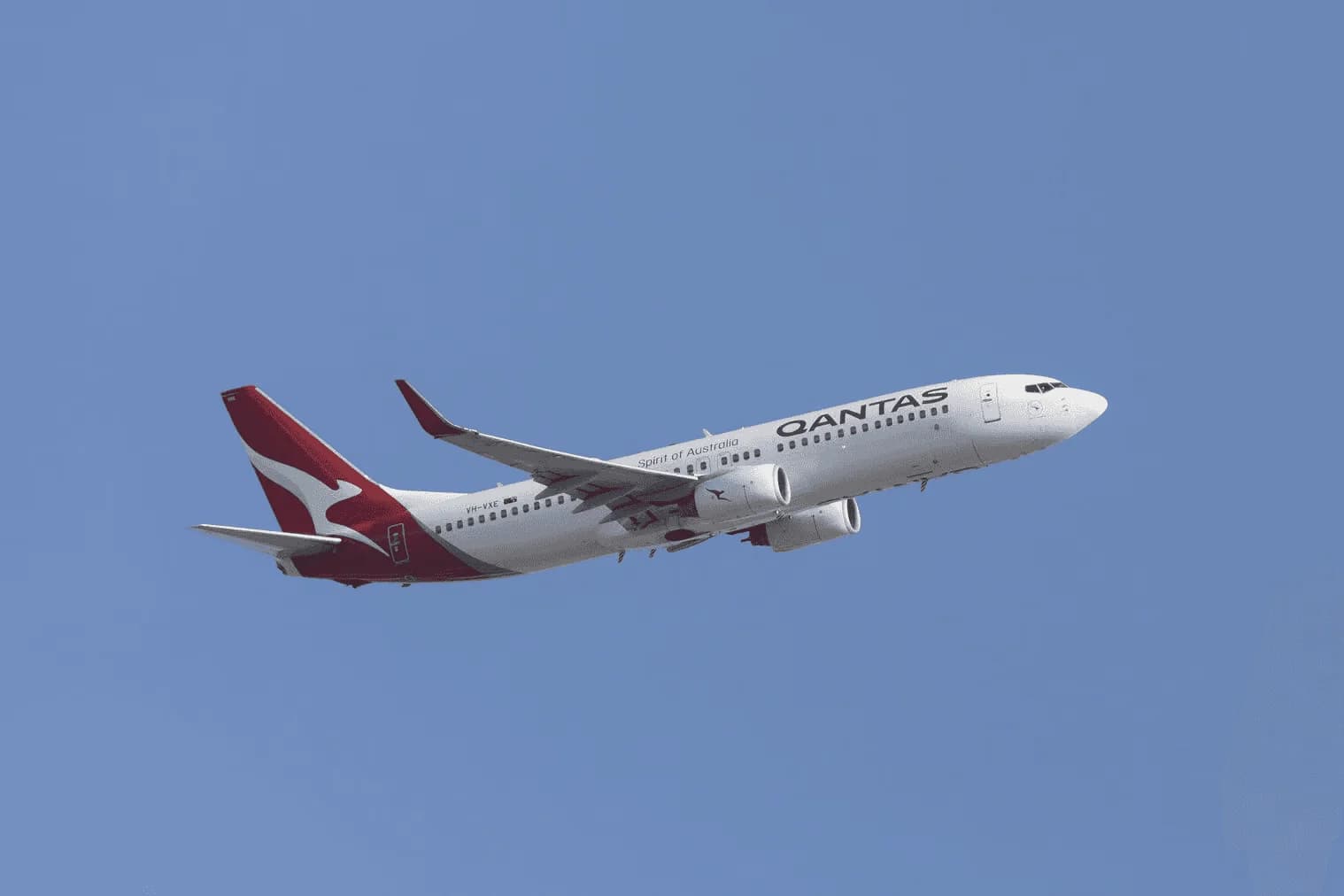
The Boeing 737-800 is a workhorse in Qantas's domestic fleet, featuring 12 business class seats in a 2-2 layout and economy in a standard 3-3 configuration. This guide reveals the best and worst seats to maximize your comfort on this popular narrow-body aircraft.
TL;DR
The 737-800 offers 2-2 business and 3-3 economy layouts. Book 2A/2F or 3A/3F in business for optimal positioning. In economy, aim for row 4 (bulkhead with extra legroom) or row 14 (exit row with full recline). Avoid seat 9A (no window), the last row (30) near galley and lavatories, and row 13 if recline is important.
Business Class
Qantas offers 12 business class seats on the 737-800 in a 2-2 configuration across rows 1-6. Each seat features 37 inches of pitch and 22 inches of width, providing reasonable comfort for short to medium-haul flights. However, note that this cabin does not feature privacy doors between seats. The forward positioning of business class means faster boarding and deplaning, plus proximity to the galley for beverage and meal service.
Economy Class
Economy spans rows 7-30 in a 3-3 layout with 30 inches of pitch and 17.2 inches of width - standard for narrow-body aircraft. Most seats are comparable, but specific rows offer advantages: the bulkhead row (4) provides extra legroom at approximately 38 inches, while row 14 benefits from exit row spacing and full recline capability. Avoid the last row due to galley and lavatory proximity, which creates noise and odor issues.
Best seats
Seat
Cabin
Why
2A / 2F
Business
Premium positioning with aisle access; forward placement for priority service
3A / 3F
Business
Excellent window seats with full aisle access in second business row
Row 4
Economy
Bulkhead row with approximately 38 inches of legroom; priority boarding
Row 14
Economy
Exit row with full recline capability and enhanced space
Seats to avoid
Seat
Cabin
Why
9A
Business/Economy
No window despite window seat designation; obstructed views
Row 30
Economy
Last row positioned near galley, lavatories, and engines; noise, odor, and high foot traffic
Row 13
Economy
Recline may be restricted due to bulkhead wall behind; limited personal space
⚡ Power & Connectivity Reality Check
The Qantas 737-800 does not offer AC power outlets or USB charging ports at any seat, making it unsuitable for longer domestic routes if you rely on device charging. WiFi connectivity is available through Qantas' Intelsat system, but speeds are inconsistent - typically 2 - 5 Mbps - and streaming video is not reliably possible on most Australian domestic routes. The aircraft uses a seatback IFE (in-flight entertainment) system rather than streaming to personal devices, which means you're locked into Qantas' content library and cannot use your own apps. For business and premium economy passengers, Bluetooth audio pairing is supported on the seatback screens, but standard economy entertainment access varies by seat location.
🧳 Overhead Bin Strategy
The 737-800 has limited overhead bin capacity relative to larger widebody aircraft, with bins tapering toward the rear - expect tighter clearance in rows 20 and beyond. On full domestic flights, gate-checking carry-ons becomes standard practice, particularly for larger roller bags, so a soft-sided cabin bag is your safest bet for guaranteed overhead access. Rows 1 - 12 (business and forward premium economy) almost always secure overhead space due to early boarding, but standard economy passengers in rows 13 - 25 risk losing bin access on high-load flights. A standard roller carry-on (22×14×9 inches) fits wheels-in only in the larger forward bins; sideways placement is necessary in rows 15+, and a soft-pack or backpack is the more practical choice for rear seats.
🏃 Boarding & Exit Strategy
Qantas uses a tiered boarding system prioritizing business class, frequent flyer elites, and families with young children before general boarding, meaning rows 1 - 6 typically deplane within 60 seconds of the aircraft door opening. The 737-800 uses both forward (L1/R1) and rear (L2/R2) doors for exit on domestic flights; passengers in rows 13 - 25 often deplane faster via the rear stairs, making mid-cabin seats a paradoxical advantage for quick turnarounds. For tight domestic connections, avoid rows 18 - 25 entirely; instead, book rows 7 - 12 to balance reasonable exit speed with overhead bin access. Business class (rows 1 - 6) guarantees fastest deplaning but offers no gate proximity advantage, so for a 30-minute connection, any row between 6 - 14 is optimal.
📱 The Booking Intelligence
Qantas opens seat selection 24 hours before domestic flight departure for all fare classes, but business class and frequent flyer elite members (Silver and above) gain access 48 hours in advance - giving them first pick of premium economy seats and exit rows. Exit row seats (rows 11 - 12 on the 737-800) are typically held back for elite members and released only 48 - 72 hours before departure to standard passengers, making them difficult to secure unless you book far ahead or hold status. Rows 7 - 10 (premium economy) become available 7 - 10 days before departure and offer the best balance of legroom, bin access, and boarding speed; these seats rarely stay available past 5 days pre-departure on full flights. Pro tip: Set a phone reminder for exactly 48 hours before your flight time and check seat selection immediately when the clock strikes - mid-cabin premium economy seats often unlock at that precise moment and vanish within minutes on popular routes.
FAQ
Does the Qantas 737-800 have premium economy?
No, this aircraft features only business and economy cabins. Premium economy is not available on this aircraft type.
Can I recline in business class?
Yes, business class seats offer recline capability with 37 inches of pitch. However, there are no privacy doors, so be considerate of neighboring passengers.
Which economy row has the most legroom?
Row 4 (bulkhead) offers approximately 38 inches of legroom compared to the standard 30-inch pitch. Row 14 (exit row) also provides additional space but may have slightly restricted recline.
Is seat selection free on Qantas?
Seat selection policies vary by fare type and frequent flyer status. Qantas frequent flyer members typically receive complimentary seat selection; premium cabin passengers and some paid fare classes may also have free selections. Basic economy fares may incur a fee.
How long is a typical Qantas 737-800 flight?
The 737-800 primarily operates domestic Australian routes ranging from 1.5 to 5 hours. Common routes include Sydney-Melbourne, Sydney-Brisbane, and Melbourne-Perth services.