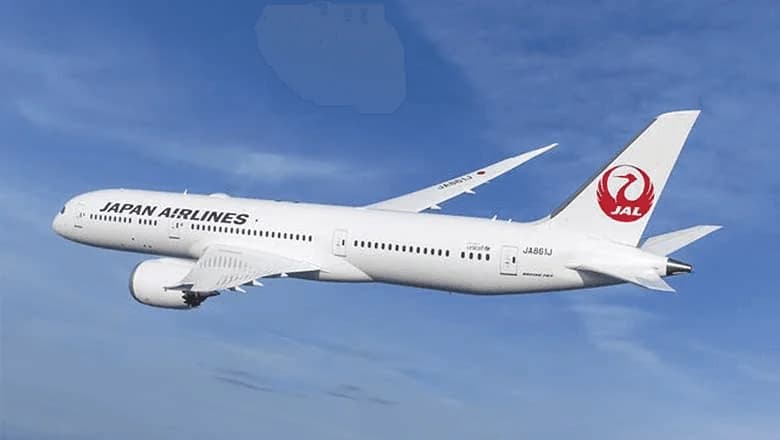
Japan Airlines operates a modern fleet across long-haul routes with varying cabin configurations. The A350-1000 offers the most premium experience with enclosed suites, while the 777-300ER and 787 variants provide different comfort levels for business and economy travelers.
TL;DR
JAL's A350-1000 features exclusive 1-2-1 business suites with privacy doors, making it the best choice for premium travelers. The 777-300ER uses a 2-3-2 layout without privacy, while 787s offer 1-2-1 configurations. Economy passengers benefit from 3-3-3 seating wider than standard configurations. Avoid window seats on the 777-300ER if you're a larger passenger, and skip 11A/11K on that aircraft entirely.
Business Class
JAL's business class varies significantly by aircraft. The A350-1000 is the flagship, featuring Safran enclosed suites in a 1-2-1 configuration with privacy doors - the most private option in the fleet. The 777-300ER uses a 2-3-2 layout with Jamco Apex Suites offering 25.5" width but no privacy doors. The 787-9 provides Safran Sky Suite III seats in a 1-2-1 layout but with narrower 20" width and no door isolation. The 787-8 varies in both layout (1-2-1 or 2-2-2) and seat type depending on configuration.
Economy Class
All JAL aircraft feature a 3-3-3 economy layout, which is wider than the standard 3-4-3 configuration found on many competitors. This provides additional comfort and shoulder room for all passengers. Exact pitch specifications are not detailed, but the wider cabin configuration is a notable advantage for long-haul economy travel.
Best seats
Seat
Cabin
Why
Aisle suites (C, D, J, K)
Business
A350-1000 enclosed suites with maximum privacy and direct aisle access
1A-1K
Business
Forward cabin positioning with priority service on all aircraft
C or H seats
Business
777-300ER aisle seats recommended for larger passengers seeking width
Window seats
Economy
3-3-3 configuration provides better width than standard, ideal for window access
Seats to avoid
Seat
Cabin
Why
11A, 11K
Business
777-300ER seats without window access despite window row position
Window seats (A, L)
Business
777-300ER windows unsuitable for larger passengers due to 25.5" width constraint
Any Sky Suite III
Business
787-9 suites widely criticized as uncomfortable despite 1-2-1 configuration
Rear rows
Economy
Standard proximity to lavatories and galley noise typical of economy seating
✈️ The Version Lottery
JAL's business class splits into three distinct products across the A350-1000, 777-300ER, and 787 variants, creating meaningful quality gaps. The A350-1000 operates flagship routes (Tokyo-London, Tokyo-New York) with fully enclosed Safran suites; the 777-300ER serves regional long-haul with open Jamco seats; the 787-9/8 sit in the middle with newer Safran suites but narrower cabins. Identify your aircraft on your booking confirmation or contact JAL directly - if a 777 is assigned to your route, it's worth calling to request a 787 or A350 repositioning if available. The A350 commands premium pricing but justifies it; switching flights for a 787 over a 777 is worthwhile for transpacific routes, less critical for shorter flights under 7 hours.
🏆 The Competitive Verdict
JAL's A350 business class matches ANA's 787-10 and Singapore Airlines' A350 for privacy and recline, but underperforms on meal quality and seat width compared to Cathay Pacific's 777-300ER or LATAM's 787-9. Versus United's Polaris on 777, JAL wins on cabin atmosphere and crew service but loses on seat comfort width and IFE responsiveness. For couples, the A350's enclosed suites are unmatched in Asia; solo travelers get better value on ANA or Singapore; tall passengers should avoid the 777 entirely - the 787's direct aisle access and wider recline compensate for tighter pitch. On Tokyo-London or Tokyo-New York, JAL's A350 is the category leader; everywhere else, regional competitors offer better value.
🛁 Lounge & Ground Experience
JAL's Narita International Lounge (Terminal 1) and Haneda First Class Lounge offer shower spas, kaiseki dining, and quiet suites - accessible to all business class passengers. The Haneda facility is superior: private shower rooms with amenities, a dedicated restaurant serving Japanese and Western cuisine, and a spa offering 15-minute neck/shoulder treatments (complimentary for flights over 12 hours). Routing via Tokyo Narita or Haneda for a connection adds 6 - 8 hours but justifies it only if your layover exceeds 5 hours; the shower and lounge meal are genuine recovery tools on transpacific itineraries. For solo travelers or those with tight connections, the lounge benefit alone doesn't justify rerouting - use it only if already positioned in Japan.
🌙 The Overnight Formula
Book window seats 1A, 1K, or 2A on the A350 to maximize privacy during overnight segments; on the 787-9, seats 1A and 1K offer direct aisle access and minimal disruption. Skip the pre-departure meal service and request the crew hold dinner until 2 hours post-takeoff - the delay allows natural sleep onset without digestion interruption. Bring a neck pillow (the seat reclines to 180° but lateral support is poor), earplugs, and request the lavender pillow spray if available; decline the bedding kit and use your own light blanket for temperature control. For a 12+ hour overnight flight, aim to sleep 6 - 7 hours: request a 7 a.m. wake-up call, skip breakfast service, and eat a light meal 90 minutes before landing to reset your appetite for arrival timezone.
FAQ
Which JAL aircraft has the best business class?
The A350-1000 is the clear winner with Safran enclosed suites featuring privacy doors in a 1-2-1 layout. This is JAL's newest and most premium business class offering, providing maximum privacy and comfort for long-haul flights.
Are JAL economy seats wider than other airlines?
Yes. JAL uses a 3-3-3 economy configuration on all aircraft, which is wider than the standard 3-4-3 found on many competitors. This provides noticeably better shoulder room and comfort for economy passengers.
Why should I avoid the 787-9 business class?
While the 787-9 offers a 1-2-1 layout, the Safran Sky Suite III seats have received significant criticism regarding comfort. The seats are also narrower at approximately 20 inches compared to the 777-300ER's 25.5 inches, making them less suitable for larger passengers.
Can I get a window seat on the 777-300ER if I'm a larger passenger?
No. The 777-300ER's window seats are cramped due to the 25.5" width constraint. Instead, request an aisle seat (C or H) on the 777-300ER for better comfort and easier movement.
What's the difference between JAL's 787 configurations?
The 787-9 and 787-8 differ in size and seating options. The 787-8 may have either 1-2-1 or 2-2-2 business layouts depending on the specific configuration, while the 787-9 standardizes on 1-2-1. Seat comfort and width vary between the two aircraft types.