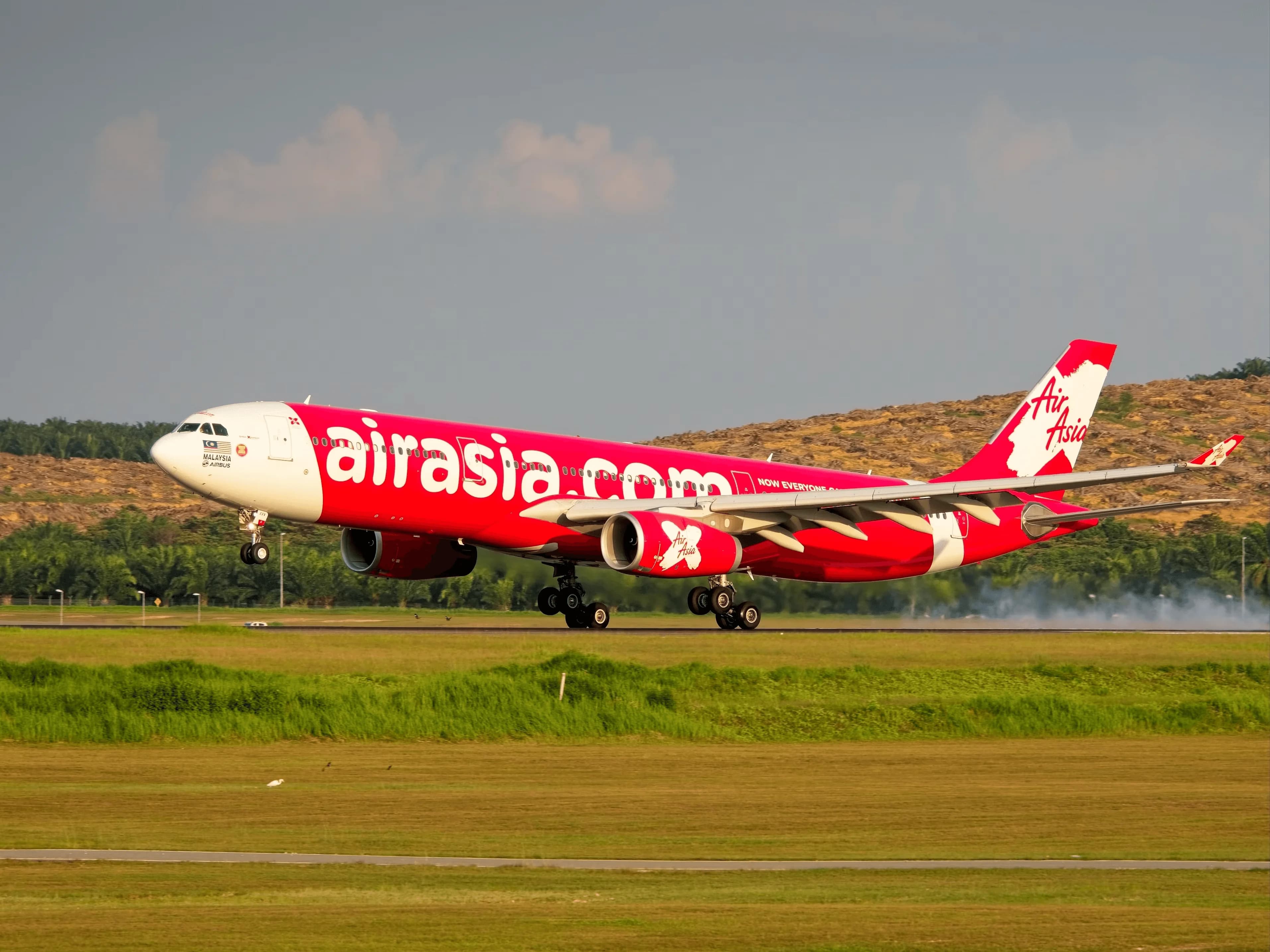
The AirAsia X A330-300 offers long-haul comfort with Business and Economy cabins across a 2-2-2 and 3-3-3 layout respectively. Understanding seat selection can significantly enhance your flying experience, whether you're seeking premium comfort or maximizing legroom on a budget.
TL;DR
The A330-300 features a 2-2-2 Business Class and 3-3-3 Economy layout. Choose window seats in Premium Flatbed away from galleys, with back-row positions preferred for optimal privacy. In Economy, prioritize exit rows or forward cabin locations, and avoid seats near galleys, lavatories, and the very last rows.
Business Class
AirAsia X's Business Class on the A330-300 features a 2-2-2 configuration, offering a more intimate cabin experience compared to standard wide-body layouts. Seats are typically positioned in rows 12-30 depending on aircraft configuration. Window seats provide direct cabin access and privacy advantages, making them the premium choice for long-haul flights. Avoid seats immediately adjacent to galley and lavatory zones, as these locations experience higher foot traffic and operational noise.
Economy Class
Economy Class spans the remainder of the aircraft with a traditional 3-3-3 configuration, accommodating the majority of passengers on AirAsia X's long-haul routes. The spacious cabin allows for reasonable comfort on extended flights. Forward Economy sections near the Business Class cabin offer superior service attentiveness, while exit row seats provide additional legroom for taller passengers willing to accept safety equipment responsibility. Avoid the very last rows of the aircraft, which experience vibration and noise from the tail section, and rows directly adjacent to lavatories and galleys where service disruptions are frequent.
Best seats
Seat
Cabin
Why
Window seats rows 24-30
Business
Premium Flatbed configuration with direct aisle access and privacy from galley activity
Exit row seats (Economy)
Economy
Significantly increased legroom and forward-facing positioning for comfort
Forward Economy rows
Economy
Proximity to cabin crew and reduced noise compared to aft sections
Seats to avoid
Seat
Cabin
Why
Rows adjacent to galleys
Business/Economy
Frequent crew movement, noise, and service interruptions throughout flight
Rows adjacent to lavatories
Business/Economy
Persistent odors, foot traffic queues, and limited privacy
Last 3-5 rows (Economy)
Economy
Tail vibration, engine noise, and reduced pressurization comfort on long flights
💰 The True Cost Breakdown
AirAsia X charges ₹1,500 - ₹3,500 (USD $18 - $42) for preferred seat selection on the A330-300, with front rows and emergency exits commanding the higher end and standard economy seats at the lower end. Premium Economy seats (if offered on your route) typically cost ₹4,000 - ₹6,000 additional, while Business Class is a separate cabin product. Compared to legacy carriers like Singapore Airlines or Thai Airways on the same route, AirAsia X's base fares are 40 - 60% cheaper, but adding preferred seats can close that gap by 15 - 20% - making the real value proposition strongest when accepting a standard seat or flying off-peak when selection fees drop.
📐 The Space Reality
Economy seats on the AirAsia X A330-300 offer 31 inches of pitch and 17.2 inches of width, which sits at the tighter end of long-haul budget carrier standards and noticeably less than the 32 - 34 inches you'd find on carriers like Qatar Airways or Thai Airways on comparable routes. The seats feel genuinely slimline - the tray table is shallow and will not safely accommodate a laptop in open position; you'll need to use your lap or close it quickly during service. Legroom is passable for 6 - 8 hour flights if you're under 5'10", but taller passengers will feel cramped, and aisle seats don't offer appreciable extra room due to the cabin's width constraints.
⚡ Power & Connectivity Reality Check
Standard economy seats on this aircraft have no USB ports or power outlets; only Business Class and certain premium rows offer charging capability, so bring a fully charged 20,000 - 30,000 mAh battery pack for long-haul routes. WiFi (Viasat or Intelsat depending on route) is available but costs ₹500 - ₹800 ($6 - $10) for a full flight pass or ₹200 ($2.50) for 1-hour passes, with real-world speeds of 3 - 8 Mbps - adequate for messaging and light streaming but not reliable for video calls. Most passengers skip the WiFi charge and rely on pre-downloaded entertainment or reading; the investment in WiFi is only worthwhile if you need to work during flight.
🏃 Boarding & Exit Strategy
AirAsia X boards by zone and row number announced via gate signage (no assigned groups printed on boarding passes), and the process is typically single-file from a single forward door, making early boarding from rows 1 - 20 meaningfully faster for deplaning. Both front and rear doors are used for exit in most cases, but the rear door deplane is considerably slower due to the narrower rear galley bottleneck - window and aisle seats in rows 1 - 10 will reach the terminal 3 - 5 minutes ahead of row 30 passengers. If you have a tight onward connection (under 2 hours), prioritize front-section seats even if you pay the selection fee; a standard-pitch seat in rows 1 - 8 beats a free middle seat in row 25 by a meaningful margin.
FAQ
Does the A330-300 have Premium Economy?
No, AirAsia X's A330-300 configuration operates with Business and Economy classes only. There is no dedicated Premium Economy cabin on this aircraft.
What is the Business Class privacy setup?
The 2-2-2 Business Class layout provides excellent side-by-side spacing. However, there is no privacy door between rows, so positioning away from high-traffic areas near galleys remains important for uninterrupted rest.
Which Economy seats have the most legroom?
Exit row seats in the Economy cabin provide substantially more legroom than standard seats. Forward cabin rows also offer better comfort due to proximity to the galley and fewer passengers behind generating movement.
How far apart are the galleys and lavatories?
Galley and lavatory locations vary by specific aircraft configuration. Always request your seat map during booking to identify and avoid these high-traffic zones, particularly important for overnight long-haul flights.
Is the A330-300 suitable for long-haul flights?
Yes, the A330-300 is purpose-built for long-haul routes. Its size and range make it ideal for extended flights, though seat selection becomes crucial for maximizing comfort over 8-16 hour journeys.